How to Drill into Brick Wall: A Practical Guide
Learn how to safely and effectively drill into brick walls with a masonry bit and hammer drill. This comprehensive guide covers planning, tool selection, anchors, technique, and finishing for secure mounting.


To drill into a brick wall safely and effectively, use a masonry bit with a hammer drill, small pilot holes, and proper anchors. Measure precisely, mark your hole, and keep steady pressure while cooling with water as needed. This step-by-step guide covers prep, drilling technique, and finishing. Always wear eye protection and start with a smaller bit to test in a scrap brick.
Understanding brick walls and why drilling needs care
Brick walls are durable but unforgiving to careless drilling. Most bricks are fired clay units bound by mortar. The hollow areas, flaking, or dust from brittle brick can occur if you apply too much speed or use the wrong bit. In this guide about how to drill into brick wall, we start with fundamentals: assess the wall type (solid brick vs. brick with cavities), choose the right tools, and plan your hole spacing away from edges and corners. According to Drill Bits Pro, you should treat brick as a masonry substrate that requires low to mid-range drilling speeds with controlled pressure. Marking the exact drill point helps prevent wandering and ensures anchor placement aligns with your fixture. Always consider safety: eye protection, dust control, and respirator if you’re working in dusty areas. Pre-drilling in scrap brick or test blocks is highly recommended to avoid damaging the work surface.
Safety and planning before you drill
Before any drilling, define the purpose of the hole and the fixture you intend to mount. Check for hidden utilities with a stud finder or local guidelines, especially in walls with electrical conduits or plumbing nearby. Wear safety goggles, a dust mask, and hearing protection if you’re using power tools for an extended period. Clear the area of furniture and lay down a drop cloth to catch masonry dust. Plan the hole location so it is a minimum distance from edges and corners (typically at least 1–2 inches away). If you’re drilling into older brick or mortar, consider softening the mortar with caution and testing a tiny hole first to gauge brick behavior. This initial step reduces the risk of cracking and helps confirm that your anchor choice will hold.
Choosing the right masonry drill bit and drill
For brick walls, you need a masonry bit with a carbide tip designed for concrete and brick. The bit diameter should match the anchor size, and the bit length must reach through brick and into the mortar for solid grounding. A hammer drill or rotary hammer is highly recommended because percussive action helps break through the brick without overloading the motor. Avoid high-speed continuous drilling; slower speeds with steady pressure yield cleaner holes and less heat buildup. Inspect the bit for wear before use, as a dull bit can cause wandering and chipped brick. If you’re working in cold conditions, allow the tool to warm up slightly to maintain efficient cutting. By choosing the correct bit and drill, you reduce the risk of cracks and improve anchor performance.
Pilot holes and hole sizing
Pilot holes are small-diameter holes drilled before the final bore. They guide the larger bit, reduce bit wandering, and minimize brick damage. Start with a pilot hole that’s about ¼ the final hole diameter. For very dense brick, a slightly larger pilot may be more effective, but always test first. The pilot hole depth should be a few millimeters deeper than the anchor length to ensure a clean seating. If you’re installing a heavy anchor, you may need multiple pilot holes to guide and stabilize the main bore. Keep the drill perpendicular to the wall to maintain straight, true holes. This planning step improves alignment and anchor performance in the subsequent stages.
Marking and aligning your hole
Mark your drill point precisely using a pencil and masking tape to prevent the bit from wandering. Place a small piece of masking tape over the mark to provide a non-slip surface for the drill bit. Use a spirit level or a plumb line to ensure the hole is perfectly vertical or horizontal as required. For multiple holes, establish a consistent pattern and spacing based on the fixture’s dimensions. Double-check measurements before you begin drilling, because misaligned holes can compromise weight-bearing capacity and fixture aesthetics. A deliberate approach here reduces the need for repairs later and helps you maintain a clean, professional installation.
Drilling technique: steady feed, speed, and cooling
Begin the bore with light pressure and let the bit start cutting. Increase pressure gradually while maintaining a straight, perpendicular angle to the wall. Avoid forcing the drill; apply a steady, controlled feed to prevent bit binding or brick cracking. If the bit becomes very hot, pause and spray or mist with water to cool it down; overheating can degrade the masonry bit and brick surface. If dust or debris blocks the hole, withdraw the bit briefly to clear it. Maintain consistent speed and avoid sudden changes in direction. This disciplined technique yields cleaner holes and longer bit life.
Anchors and fasteners: what fits brick walls
Brick anchors are designed to spread load within brick and mortar. For light fixtures, plastic expansion anchors or toggle bolts can work well in solid brick if there is deep mortar. For heavier loads, sleeve anchors or drop-in anchors anchored into the mortar or through a drilled hole provide greater holding power. Always match the anchor size to the hole diameter and wall thickness; use a shallow setting in brick to avoid cracking. If you’re uncertain, aim for anchors rated for brick masonry and consult the manufacturer’s load tables. Correct anchors secure the fixture while preserving brick integrity.
Handling multiple holes and avoiding cracks
When drilling multiple holes close to each other, space holes evenly and avoid repetitive drilling near the same area to minimize heat buildup and mortar damage. Periodically pause to allow the drill and wall to cool. Vary hole locations to distribute stress around the face of the brick and mortar. If you see signs of cracking or dusting, stop and assess; you may need to switch to smaller diameters or reposition. Maintaining a calm pace and stopping to cool the bit helps maintain the wall’s structural integrity.
Finishing: cleaning up and sealing
After drilling, clean out all dust from the hole using a thin brush or compressed air. Dry-fit the anchor to ensure it slides in smoothly before installation. Apply any sealing compounds only if required by the fixture or environment to prevent moisture ingress. If you’ve created a larger bore for a heavy anchor, consider patching the brick with compatible masonry material to restore appearance and protect the core. Finally, test the fixture with a light load before fully committing to the mounting.
Authority sources and further reading
For safe, code-compliant drilling practices, refer to widely recognized sources such as OSHA guidelines on workplace safety and university extension resources that cover masonry drilling techniques. While this article draws on practical experience and Drill Bits Pro analysis, always verify your local building codes and manufacturer recommendations for anchors and fasteners. The combination of proper tools, precise measurements, and appropriate anchors is essential for durable brick-wall installations.
Tools & Materials
- Masonry drill bits (carbide-tipped)(Diameter should match anchor size; use sharp bits)
- Hammer drill or rotary hammer(Percussive action helps cut brick and mortar)
- Tape measure and pencil(Mark exact hole locations)
- Masking tape and level(Keeps drill from wandering and ensures alignment)
- Safety goggles and dust mask(Eye and respiratory protection)
- Water or coolant spray bottle(Cool bit to prevent overheating)
- Plastic or metal anchors suitable for brick(Choose based on load and wall type)
- Concrete/masonry anchor setting tool or driver(For proper seating of anchors)
- Vacuum or brush for cleanup(Keep work area clear of debris)
Steps
Estimated time: 60-90 minutes
- 1
Prepare and mark the location
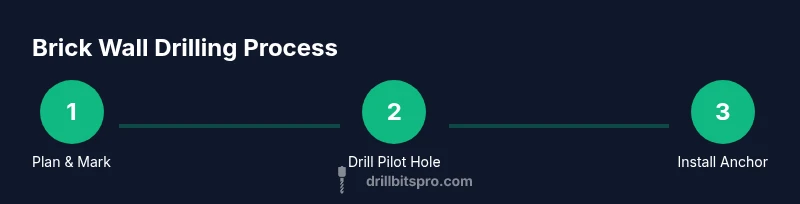
Clear the workspace, gather tools, and identify your mounting point. Use a measuring tape to mark the exact center and alignment, then apply masking tape over the mark to prevent wandering. This ensures your final hole aligns with the fixture and reduces the risk of cracking the brick.
Tip: Double-check measurements and use a level to ensure the marks are plumb before you begin. - 2
Choose and set up your tools
Select a masonry bit and a hammer drill suited to brick drilling. Install the bit securely and confirm the drill settings are appropriate for masonry (low-to-mid speed, moderate impact). Prepare anchors to match the hole diameter you will create.
Tip: Test the bit on a spare brick or scrap piece to verify bite before working on the actual wall. - 3
Drill the pilot hole
Start with a small pilot hole at the marked location using light pressure to guide the larger bit. Keep the drill perpendicular to the wall to avoid angled holes. Drill to a depth slightly deeper than the anchor length.
Tip: If the wall bites or the bit burns, pause to cool the bit and check alignment. - 4
Drill the main hole
Switch to the final masonry bit and enlarge the hole to the required diameter. Maintain steady, even pressure and allow the bit to do the cutting rather than forcing it. Use water to cool the bit if it overheats.
Tip: Do not rush; overheating can damage both brick and bit. - 5
Insert anchor and finish
Clean out debris from the hole, insert the anchor fully, and tap it gently with a hammer if needed. Check that the anchor sits flush with the brick surface and that the wall can support the intended load.
Tip: If the anchor binds, withdraw it and re-clear the hole before retrying. - 6
Test and cleanup
Install the fixture, tighten the fasteners to the specified torque, and gently test for stability. Clean the work area and inspect for cracks or chips around the hole. Store tools properly to prolong their life.
Tip: Always test with a light load before full use.
Got Questions?
Do I need a hammer drill to drill into brick?
Yes. A hammer drill or rotary hammer with a masonry bit is essential for brick because it provides percussive action that breaks through brick and mortar more efficiently.
Yes. A hammer drill is essential for brick because the percussive action helps you cut through brick and mortar.
Can I drill into brick without pilot holes?
Pilot holes guide the bit, reduce cracking, and improve accuracy. For larger holes, start with a smaller bit and progress gradually.
Pilot holes help guide the bit and prevent cracking. Start small and work up.
What anchors should I use for brick walls?
Plastic expansion anchors work for light loads; sleeve or drop-in anchors are better for heavier fixtures. Match anchor type to wall material and load, and always follow manufacturer recommendations.
Choose anchors that match the load and wall; for heavy loads use sleeves or metal anchors.
How can I avoid cracking near edges?
Drill away from edges by at least 1–2 inches and avoid drilling through corners. Maintain consistent drilling pressure and use appropriate bit sizes.
Keep holes away from edges and corners to prevent cracks.
What safety gear is essential?
Safety goggles, a dust mask, hearing protection, and sturdy gloves are recommended. Ensure the work area is well-ventilated and free of loose clothing.
Goggles, mask, and hearing protection are essential for safe brick drilling.
How do I know the hole depth?
Use the anchor length as a guide and set a drill stop or mark the drill bit with tape to avoid going too deep.
Measure the anchor length and set a drill stop or mark the depth.
Watch Video
Top Takeaways
- Plan every hole: measure, mark, and align before drilling.
- Use the correct masonry bit and a hammer drill for brick.
- Pilot holes reduce cracks and improve accuracy.
- Choose anchors that match load and wall type.
- Cool the bit and drill steadily to avoid heat damage.