What You Need to Drill Into Brick: A Practical Guide
Learn exactly what you need to drill into brick safely and effectively. This comprehensive guide covers tools, bits, drill settings, safety, and step-by-step techniques for DIYers and pros in 2026.


To drill into brick, gather a masonry bit, a hammer drill or rotary hammer, safety gear, and the right settings. Mark the spot, start with a small pilot hole, then move to the final bit size. Maintain steady pressure and let the tool do the work; pause if the brick overheats. Optional: use a center punch for accuracy and a drill guide for repeats.
Introduction to drilling into brick
Brick is dense and abrasive, which makes drilling a bit more demanding than drilling into wood or drywall. If you ask what you need to drill into brick, the answer is a focused toolkit: a quality carbide-tipped masonry bit, a hammer drill or rotary hammer, a center punch, safety glasses, and a dust mask. According to Drill Bits Pro, choosing the right tool and technique dramatically reduces the risk of chipped edges, misaligned holes, or weak anchors. In this guide we lay out each component, explain how brick behaves differently, and translate that knowledge into reliable, repeatable results. You’ll see practical tips, real-world scenarios, and clear comparisons that help you plan anchors, plugs, and fasteners with confidence.
Understanding brick behavior and how it affects drilling
Brick varies by style, density, and era of manufacture. Common hardness differs between brick faces and cores, and older bricks can crumble if drilled aggressively. Mortar joints also influence hole quality, sometimes cracking if the drill angle isn’t perfect. With this in mind, you’ll want to adjust speed and pressure based on brick type, avoid overheating, and use sharp bits. The core idea is to maintain control while allowing the masonry bit to do the cutting, rather than forcing the drill through with brute force.
Selecting the right drill bits for brick
Masonry bits designed for brick use carbide tips to resist heat and wear. For most general-purpose jobs, a 1/4-inch to 3/8-inch bit handles common wall anchors, while larger anchors may require bigger diameters. A high-quality carbide-tipped bit tends to last longer and stay sharper under repeated use. For very dense brick or harder stone, consider a specialized bit with a reinforced shank and a thicker cross-section. Always inspect bits for dull edges or nicks before drilling to ensure clean entry and reduce breakout.
Drill tools: hammer drills, rotary hammers, and safety gear
A hammer drill or rotary hammer provides the percussive action needed to break through brick. Use hammer mode only when you’re actively drilling; switching in and out of percussive mode can wear the tool and spoil the hole. Safety gear is non-negotiable: safety glasses protect against flying chips, a dust mask keeps brick dust from your lungs, and hearing protection reduces fatigue during longer jobs. Keep a clean, well-lit workspace and secure the workpiece to prevent movement during drilling.
Preparing the work area and marking the drill point
Clear the area of debris, lay down a drop cloth if indoors, and locate the exact drilling point. Use masking tape to mark the spot and prevent chipping around the entry. Center punching the mark creates a small dimple that guides the bit and reduces walking. If you’re drilling at height or on a scaffold, use clamps or a helper to steady the brick. Proper preparation improves accuracy and reduces rework.
Pilot holes: why and how to start small
Drilling technique: drilling to the final size with control
Post-drill care: cleaning, inspecting, and anchoring
Common mistakes and how to recover: what not to do
Tools & Materials
- Masonry drill bit (carbide-tipped)(Sizes range from 3/16 in to 1/2 in; choose based on anchor size.)
- Hammer drill or rotary hammer(Ensure hammering mode is available; use percussion only while drilling.)
- Center punch(To prevent walking on the initial point.)
- Safety glasses(Eye protection is essential.)
- Dust mask or respirator(Protects against brick dust.)
- Masking tape(Optional: helps mark shallow limits and reduce breakout.)
- Vacuum or brush for cleanup(Helps keep the work area clear.)
Steps
Estimated time: 15-25 minutes
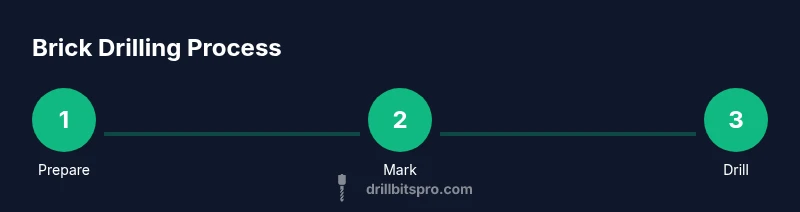
- 1
Prepare the work area
Clear the space, secure the brick surface, and put on PPE. Use masking tape to mark the hole and a splash guard for indoor work. Check for nearby utilities before drilling.
Tip: Secure the brick with clamps or have a helper hold the piece to prevent movement. - 2
Mark the drill location and center punch
Mark the exact point with a pencil, then center punch to create a tiny dimple that guides the bit. This prevents wandering and ensures a clean entry.
Tip: A small indentation reduces the chance of the bit veering off target. - 3
Drill a pilot hole
Start with a small pilot hole to ease the load on the brick and avoid cracking. Use a slow speed and light pressure, pulling the bit out occasionally to clear debris.
Tip: Let the bit do the work; avoid forcing the drill forward. - 4
Drill to the final size
Switch to the final bit size and resume drilling with steady pressure. Pause if the bit becomes very hot, and back off if you notice any cracking or chipping.
Tip: Take breaks for cooling to extend bit life. - 5
Clean and inspect the hole
Remove dust and debris with a vacuum or brush. Inspect the edge for chips or roughness that could affect anchor seating.
Tip: A clean hole ensures a secure anchor. - 6
Install anchor or plug and test
Insert the appropriate brick anchor or plug and gently pull to test the hold. If needed, widen the hole slightly and retest.
Tip: Choose an anchor compatible with brick and the load.
Got Questions?
Can I drill directly into brick without using a pilot hole?
Pilot holes help start correctly and reduce brick breakout. They also minimize bit wandering.
Pilot holes help start cleanly and prevent wandering.
What size drill bit should I use for brick anchors?
Anchor sizes vary; common practice is to use a bit size specified by the anchor, often between 1/4 in and 3/8 in. Always check the packaging.
Choose the bit to match your anchor’s shank.
Is a regular drill enough for brick?
A hammer drill or rotary hammer is preferred. Regular drills can struggle and overheat, leading to poor holes and wear.
A regular drill may burn out; use a hammer action.
What type of drill bit is best for brick?
Carbide-tipped masonry bits are the standard choice for brick. They resist heat and wear better than plain steel bits.
Carbide masonry bits are the way to go.
How do I prevent cracks around the hole?
Drill perpendicularly, use an appropriate pilot, and avoid applying excessive pressure. Let the bit do the work.
Keep the drill straight and steady to prevent cracks.
Do I need to lubricate the bit when drilling brick?
Lubrication is generally not required for brick drilling; damp bricks can create dust. Use water sparingly only if the bit overheats.
Lubrication isn’t usually necessary for brick; keep the bit cool with pauses.
Watch Video
Top Takeaways
- Prepare the right tools and PPE before starting
- Use a center punch to prevent wandering
- Drill a pilot hole before final size
- Maintain perpendicular alignment and steady pressure
- Anchor securely and inspect the hole