Difference Between a Drill and an Impact Drill: A Practical Guide
Discover the difference between a drill and an impact drill, when to use each, and how to choose the right tool for wood, metal, masonry, and screw-driving tasks.


The difference between a drill and an impact drill hinges on how they apply force. A standard drill relies on rotating motion alone, making it ideal for precise holes in wood, metal, and plastic with minimal tear-out. An impact drill adds hammering action that delivers rapid concussive blows while spinning, boosting torque for masonry and heavy screwdriving. For most DIY tasks, choose the tool that matches the material and desired torque, and consider a model with selectable hammer modes for versatility.
What distinguishes the difference between a drill and an impact drill
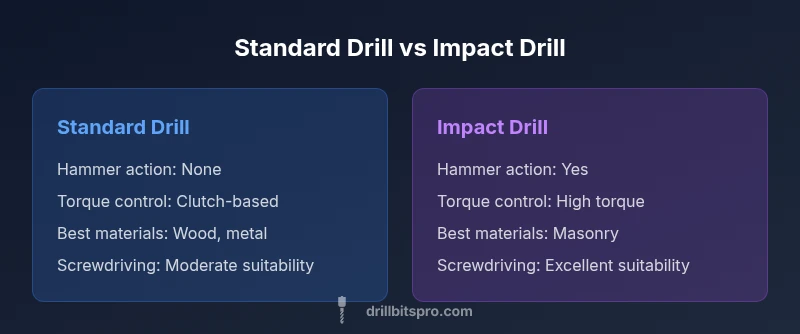
The core distinction lies in how the tool delivers force to the bit. A standard drill uses rotational motion to cut or bore, with torque controlled by a clutch or gearing. An impact drill combines rotation with a hammering action that drives the bit forward in short, rapid blows. This hammer function multiplies effective torque, enabling the bit to break through harder materials like concrete and brick. The practical upshot is that you can tackle a wider range of jobs with an impact drill, but you trade some finesse for added aggression. According to Drill Bits Pro, understanding this difference helps DIYers select the right tool for the job and avoid unnecessary wear or damage to delicate materials.
The anatomy of a standard drill: what to know before you buy
A typical standard drill features a chuck to hold bits, a variable-speed trigger, selective clutch settings (torque control), and a motor that converts electrical energy into rotational force. Weight, balance, and grip comfort influence control, especially during prolonged tasks. For precision drilling, a lighter, well-balanced drill with a smooth trigger provides steadier results. Drills intended for wood, metal, and light plastics benefit from smooth feeding and predictable torque, keeping drill bits from binding or snapping under load.
Why hammer action matters: how impact drills work
An impact drill uses a hammer mechanism that translates rotational motion into linear blows. When the user applies pressure and the trigger engages, the hammer cycles with the rotation, delivering short, high-energy impacts. This action reduces the effort needed to bore or drive screws into hard substrates. The resulting effect is a tool that can drill into masonry and drive fasteners with less user effort. In practice, the hammer action works best with masonry bits or screws designed for impact drivers, and it is less forgiving on delicate materials if used at full power.
When to reach for a standard drill: ideal materials and tasks
Standard drills excel at holes in wood, soft metals, plastics, and composites where precision is paramount. They are ideal for pilot holes, countersinking, and tasks that require tight control over hole size and depth. For these jobs, the absence of hammering minimizes bit wander, reduces risk of cracks, and preserves the surrounding material. With adjustable torque, you can start with a light touch and ramp up as needed, which is especially important when working with expensive drill bits or fragile workpieces.
When to opt for an impact drill: masonry, heavy screws, and beyond
Impact drills shine on high-torque tasks where friction and material hardness resist simple rotation. They are well-suited for drilling into brick, concrete, tile backer, and stone when used with the correct masonry bits. In screwdriving, the hammering action helps the bit bite into tough fasteners, reducing cam-out and stripping. For many users, an impact drill reduces fatigue during long screwdriving sessions and speeds up tasks that would stall with a plain drill.
Key specs to compare when shopping: torque, speed, and control
When evaluating, focus on torque range, variable speed, and the presence of a hammer function. A higher torque setting with an evenly distributed clutch improves control during heavy drilling, while speed ranges allow flexibility for different materials. Look for a tool with a durable chuck, decent handle ergonomics, and a modern battery platform if cordless. Also consider impact rate (the number of hammer blows per minute) and flight-time—these influence performance in masonry and long screwdriving jobs.
Cordless vs. corded: power delivery and run-time considerations
Corded drills deliver consistent power but tether you to a outlet. Cordless models offer mobility and are adequate for most DIY tasks, but battery life and voltage influence performance. For masonry work, a high-voltage, cordless option or a corded model with ample battery capacity often provides the best balance between portability and runtime. If you anticipate frequent masonry drilling or heavy driving, plan for a tool with a robust battery and a spare charged pack.
Bits, drivers, and accessories that unlock performance
Pair the tool with the right bits: brad-point or twist bits for wood, high-speed steel or cobalt bits for metal, and carbide-tipped masonry bits for concrete. For driving screws, use bits designed for impact use to maximize engagement. A good set of pilot-hole bits and screw-driving bits reduces wandering and improves results. Ergonomic accessories such as right-angle attachments or depth stops can help maintain consistency on longer jobs.
Real-world tasks and recommended tool choices
Woodworking: a standard drill with wood bits provides clean holes and precise depth control. Masonry projects: an impact drill with masonry bits and a hammer setting makes fast work of brick and concrete. Tile work or delicate materials: a standard drill with precision control is safer to prevent cracks. For mixed tasks in a single project, a drill with selectable hammer action offers the most versatility, letting you switch modes as material changes.
Practical usage tips: getting the most from either tool
Start with a pilot hole when drilling hard materials to guide the bit. Use a slow-to-medium speed for metal, and higher speeds for wood (while avoiding heat buildup). Apply steady, even pressure rather than hammering or forcing the bit—let the tool do the work. When driving screws, set the clutch to prevent overdriving and damage to the material. Always wear eye protection and secure the workpiece to prevent slippage.
Maintenance and safety basics: keep it performing well
Clean the chuck area after heavy use to remove dust and debris. Inspect bits regularly for wear and replace as needed. Lubricate when recommended by the manufacturer and avoid using damaged tools. Store in a dry place and protect the battery contacts from corrosion. Safety gear such as goggles, gloves, and hearing protection reduces risk during high-torque tasks.
Comparison
| Feature | Standard drill | Impact drill |
|---|---|---|
| Hammer action | None | Hammer action present (masonry-ready) |
| Torque control | Clutch-based, adjustable torque | High torque with hammer mode, torque assisted |
| Best drilling materials | Wood, metal, plastics | Masonry, heavy-duty screwdriving |
| Screwdriving suitability | Good with clutch and pilot bits | Excellent for high-torque driving |
| Weight and ergonomics | Light to medium, comfortable balance | Slightly heavier due to hammer mechanism |
| Price range guidance | Lower to mid-range | Mid to high, depending on features and battery system |
| Best use case | Precision drilling in soft materials | masonry drilling and heavy screwdriving |
What's Good
- Provides tool versatility: one tool handles drilling and driver tasks
- Impact mode speeds masonry drilling and heavy-fastener work
- Modern cordless options offer mobility and convenience
- Torque control reduces cam-out and bit wear
- Improved ergonomics in newer models
Negatives
- Hammer action increases tool weight and vibration
- Higher upfront cost for hammer-enabled models
- Incorrect mode use can damage delicate materials
- Maintenance and bit selection are more complex
Choose based on your primary tasks: standard drills for precision and light work; impact drills for masonry and heavy screwdriving.
For mixed jobs, prioritize a model with selectable hammer mode. If most work is delicate or involves wood/metals, a standard drill might suffice; reserve impact mode for masonry or tough fasteners.
Got Questions?
What is the primary difference between a drill and an impact drill?
The primary difference is hammer action. A standard drill uses rotation for drilling, while an impact drill combines rotation with hammering to increase driving torque, making it better for masonry and heavy screwdriving. The choice hinges on material and required torque.
The key difference is hammer action. Use a standard drill for precision holes; use an impact drill for masonry and stubborn screws.
Can I use a standard drill for masonry work?
Yes, but you need the right masonry bit and slower, careful technique. A standard drill lacks hammering to break through hard materials, so it requires more effort and may wear bits faster. For frequent masonry work, an impact drill or hammer drill is preferable.
You can, with the right masonry bit and technique, but for heavy masonry work an impact/hammer drill is better.
Is an impact driver the same as an impact drill?
No. An impact driver is optimized for driving screws with high torque in short bursts, whereas an impact drill adds hammering to regular drilling. They serve related but distinct roles; many users benefit from owning both a drill and an impact driver.
An impact driver drives screws with high torque; an impact drill adds hammering to drilling. They’re related but not identical.
Should I own both a drill and an impact drill?
If your projects span delicate holes and masonry work, owning both offers flexibility and efficiency. If you rarely encounter masonry or heavy screwdriving, a single versatile model with selectable hammer action might suffice.
Owning both is ideal for broad tasks, but a versatile model can cover many scenarios.
What should I look for when buying a drill vs an impact drill?
Look for torque range, vibration and weight, battery quality, and the availability of a hammer mode. Also consider chuck type, bit compatibility, and ergonomy. A balanced tool with a reliable battery and adjustable torque is a smart choice.
Check torque, weight, battery life, and whether it has a selectable hammer mode.
Are hammer drills and hammer function interchangeable terms?
Not always. Some drills feature a hammer function that is selectable, effectively turning a standard drill into an impact drill when needed. Others are dedicated hammer drills with continuous hammering. Check the mode options before purchasing.
Some drills have a selectable hammer mode; others are dedicated hammer drills. Check the spec.
Top Takeaways
- Identify your main material and task before buying
- Prefer a drill with adjustable torque for precision control
- Reserve impact mode for masonry and high-torque tasks
- Consider cordless options for portability and runtime
- Invest in quality bits to maximize performance