Hammer Drill vs Impact Drill: Which Tool to Use in 2026
Compare hammer drills and impact drills to pick the right tool for masonry, wood, metal, and screws. This expert guide analyzes use cases, performance, ergonomics, and buying tips to help DIYers and pros choose wisely.


TL;DR: According to Drill Bits Pro, hammer drills outperform standard drills for heavy masonry, while impact drills excel at screw driving and light drilling. For most DIY tasks, choose a hammer drill for concrete and a separate impact drill for screws and lighter work. These distinctions matter across tasks like drilling anchor holes, renovating floors, or building furniture.
What They Do and How They Differ
When you compare a hammer drill versus an impact drill, the fundamental difference is how each tool delivers force at the bit during operation. A hammer drill (sometimes called a rotary hammer in heavier models) combines rotation with a back-and-forth hammering action that helps the bit cut into hard materials like concrete, brick, and stone. The hammer action creates tiny fractures in the material, letting the bit advance more quickly under load while the chuck continues to rotate. An impact drill, by contrast, uses an impact mechanism to deliver bursts of rotational torque. The result is high-torque bursts that help you drive screws, fasten hardware, or drill through softer materials with less overall vibration than a full hammer-action tool. In practice, the hammer drill is the workhorse for masonry tasks, while the impact drill shines in screwing operations and light-duty drilling where control matters. For readers seeking practical guidance, the choice often comes down to the primary material you plan to work with and the type of work you do most often. According to Drill Bits Pro, the right tool tends to be defined more by material and task than by brand preference, making it essential to match performance to use case.
hammer drill vs impact drill: Use cases by material
Concrete and masonry first: A hammer drill is generally superior for holes in concrete, especially larger diameter holes where percussion helps bit advancement. In brick and block, the hammer action increases drilling speed and reduces stalling. For stone, a robust hammer drill with a chisel function can also break out waste and help with shaping openings. Wood and metal come with different expectations: An impact drill is nimble for wood screws because the intermittent torque reduces cam-out and allows fast driving. When drilling metal, a light hammer on metal can help, but often a standard drill with a metal bit or a purpose-built impact driver is preferred. The material-specific guidance helps determine which tool to own first; if your projects are masonry-heavy, a hammer drill is worth the investment; if you do more screw-driving and lightweight drilling, an impact drill can be a faster, more comfortable option. It is also common for professionals to carry both tools to ensure they have the right balance of power and control on site.
Performance Profiles: Torque, Speed, and Hammer Action
The core difference between a hammer drill and an impact drill lies in how torque and percussion are applied during operation. A hammer drill uses a motor-driven mechanism that delivers a percussive strike along the drilling axis while the bit rotates, creating efficient masonry drilling. The hammer action can be adjusted or turned off on many models, allowing standard drilling when needed. An impact drill focuses on rotational torque bursts rather than axial hammering. The result is quicker screw driving and successful drilling in metal and wood with less bit wandering. In practice, this translates to higher effective torque at low speeds with better control, especially for driving long screws. For tasks that demand both drilling and fastening, some models offer selectable modes, enabling users to switch between drilling and impact driving seamlessly.
Ergonomics, Vibration, and Fatigue
User comfort is a real differentiator between hammer and impact drills. Hammer drills typically generate more vibration due to the hammering action, which can lead to quicker fatigue over long sessions. This is especially noticeable in overhead work or when drilling large masonry holes. Impact drills tend to feel lighter and smoother because they rely more on torque bursts than on axial percussion. The tradeoff is that impact drills may require higher operator precision to avoid cam-out or bit wandering when drilling into dense materials. When you expect to work for extended periods, weigh grip design, handle size, and vibration dampening features as heavily as raw power. Look for tools with anti-vibration technology, rubberized grips, and well-balanced weight distribution to maintain control through long sessions.
Bits, Accessories, and Compatibility
Bit compatibility drives how smoothly you can switch between tasks. Hammer drills often require masonry bits with carbide tips or SDS bits for certain models, and many rotary hammers use quick-change chucks or SDS-plus interfaces. This makes them very effective for concrete, brick, or stone but requires the appropriate bit sets. Impact drills use standard twist bits for wood and metal and are compatible with a broad range of screw-driving bits. Some models offer percussion nibbles or light hammering modes for masonry without turning the tool into a full hammer drill. When expanding your kit, invest in a core set of masonry bits, wood bits, metal bits, and a range of screwdriver bits. Ensure your drill has a compatible chuck or adaptor for the bits you plan to use and consider impact-rated drill bits for improved longevity in high-torque tasks.
Cost, Durability, and Maintenance
Price often reflects capability. Hammer drills, particularly those with SDS compatibility and rotary-hammer action, tend to sit at the higher end of the price spectrum due to their construction and specialized use. Impact drills offer a wide range of models that balance cost and performance, often delivering good value for frequent screw driving and light masonry work. Durability hinges on chuck quality, motor insulation, and the presence of vibration-damping features. Regular maintenance—checking chuck tightness, cleaning dust from vents, and lubricating moving parts where recommended—extends tool life. For long-term reliability, choose reputable brands, verify warranty terms, and keep spare bits organized and accessible to reduce downtime on the job.
Real-World Scenarios: DIY and Pro Jobs
In a typical DIY project like installing a deck or framing a workshop, you may encounter both drilling and screw-driving needs. A hammer drill is usually the best choice for drilling through concrete anchor holes or drilling into masonry blocks, especially when using larger bits. For constructing a wooden frame, hanging cabinets, or attaching hardware, an impact drill shines for speed and control when driving screws. On professional sites, crew members often carry both tools or choose a high-quality multi-mode drill that can switch seamlessly between drilling and impact driving. Scenario-based planning helps ensure that you allocate the correct tool to each phase of a project, reducing waiting time for bit changes and improving overall efficiency.
Quick-Decision Framework: Which Tool for Which Job
- Identify the material: masonry (use hammer drill) vs. wood/metal (use impact drill).
- Define the task: heavy drilling and large holes (hammer drill) vs. screw driving and light-duty drilling (impact drill).
- Check required torque and control: high torque with less chatter (impact drill) vs. percussion-assisted drilling (hammer drill).
- Consider ergonomic needs: longer sessions prefer lighter, better-balanced tools; factor vibration dampening and grip ergonomics.
Comparison
| Feature | Hammer drill | Impact drill |
|---|---|---|
| Primary use | Heavy masonry and concrete drilling with hammer action | Screwing and drilling in wood/metal with controlled torque |
| Best for | Concrete, brick, stone and demolition prep | Screws, light masonry, furniture, and general-purpose drilling |
| Mechanism | Rotary hammer/hammer action with percussion | Impact mechanism with rotational torque |
| Weight/ergonomics | Typically heavier with more vibration | Lighter and more compact for comfort during long tasks |
| Bit compatibility | Masonry bits; SDS options on some models | Standard twist bits; some percussion variants |
| Power options | Corded or cordless with high starting torque | Corded or cordless with strong torque at low speeds |
What's Good
- Hammer drills excel at concrete and masonry, increasing drilling speed
- Impact drills offer superior torque for screw driving and lightweight drilling
- Cordless options provide portability for DIY and pro jobs
- Many models offer variable speed and multiple modes for versatility
- Some combo models provide both hammer and impact modes
Negatives
- Hammer drills are heavier and can cause more fatigue
- Impact drills may be less effective for tough masonry without hammer mode
- Higher-end models with multiple modes can be pricier
- Bit selection and maintenance can be more complex for specialized bits
Hammer drill is the top choice for heavy masonry; an impact drill shines for screws and light masonry tasks
Choose a hammer drill when your work centers on concrete, brick, or stone. Opt for an impact drill when you need fast screws or lighter drilling with precise torque. For mixed tasks, consider a multi-mode model that offers both hammer and impact functions.
Got Questions?
What is the main difference between a hammer drill and an impact drill?
The hammer drill adds a percussive hammer action to aid drilling in masonry, while the impact drill uses bursts of rotational torque to drive screws and drill through softer materials. This makes hammer drills better for concrete and masonry, and impact drills better for fast screw driving and general-purpose drilling.
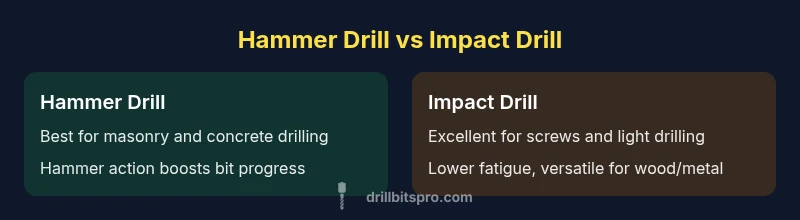
The hammer drill uses hammer action for masonry; the impact drill uses torque bursts for screws and light drilling.
Can I use a hammer drill for metal or wood?
Yes, but not as efficiently as a dedicated wood or metal drill. Use wood/metal bits with a standard drill setting, and reserve hammer action for masonry. For frequent metal drilling, consider a dedicated metal drill or impact driver with appropriate bits.
You can, but for metal or wood, a standard or impact mode usually works better.
Is a rotary hammer the same as a hammer drill?
Not exactly. A rotary hammer is a more powerful, heavier tool designed for large masonry work and chiseling; a hammer drill is lighter and suitable for most masonry drilling tasks. Many users opt for a hammer drill for everyday masonry and reserve a rotary hammer for heavy-duty jobs.
Rotary hammers are bigger and more powerful; hammer drills are more common for everyday masonry.
Are cordless hammer drills as powerful as corded models?
Modern cordless hammer drills can be very capable, but corded models typically maintain higher sustained power for large-diameter holes and prolonged use. If you work away from outlets, a high-capacity battery and fast charger are essential for performance parity.
Cordless is convenient but may have less sustained power than corded for heavy-duty drilling.
When should I rent vs buy a hammer or impact drill?
Rent if you have a one-off project requiring heavy masonry work or unique capabilities. Buy for frequent use, where ownership and quick access save time. Consider model features, warranty, and maintenance costs over time.
Rent for one-off heavy jobs; buy if you’ll use it regularly and want reliability.
What accessories do I need to get started?
A basic kit should include masonry bits, wood bits, metal bits, screw-driving bits, a chisel option if available, and a selection of SDS or quick-change chucks as appropriate. Also have safety gear and a durable carrying case for organization.
Get masonry, wood, and metal bits, plus a screw-driving bit set and a reliable case.
Top Takeaways
- Pick hammer drill for concrete and masonry work
- Choose impact drill for screws and light drilling
- Balance weight and vibration when choosing a tool
- Prioritize variable speed and clutch control for versatility
- Invest in appropriate bits and accessories for each tool