How to Put a Drill Bit in a Drill: A Practical Guide
Learn how to put a drill bit in a drill with a practical, step-by-step method. This guide covers chuck types, bit sizing, safety gear, and tips for secure, straight drilling.


You will learn how to insert a drill bit into your drill safely, align it correctly, and tighten the chuck without damaging the bit. This quick guide covers chuck types, bit sizes, and essential safety gear, so you can start drilling with confidence. Follow the steps for different bit materials and ensure proper maintenance after use.
Why properly inserting a drill bit matters
A properly inserted drill bit is essential for achieving clean, accurate holes and protecting both the tool and the operator. When the bit is not fully seated or is misaligned, you risk wobble, heat buildup, and bit breakage. According to Drill Bits Pro, correct insertion minimizes runout and distributes cutting forces evenly across the bit and chuck. Before you begin any drilling task, take a moment to verify that the bit is the right type for the material and that the shank sits squarely in the chuck. The smallest misalignment can compound quickly at higher speeds or with hard materials, leading to chipped edges and rough holes. In practice, the goal is to have a firm, centered bite from the first millimeter, with the bit held securely by the chuck to prevent creeping during the cut. This early step sets the tone for the entire operation and is worth doing right every time.
Chuck basics you should know
Most drills use a chuck to grip the bit. There are keyed chucks that require a hand-operated key to tighten and keyless chucks that you tighten by hand. The choice of chuck type influences how you load and seat the bit. The Drill Bits Pro Team notes that using the correct chuck type for your bit and application reduces wobble and improves hole quality. If you are unsure whether your chuck is keyed or keyless, check for a keyhole or a locking mechanism on the chuck body. When you insert a bit, ensure the shank is fully seated to the base of the chuck jaws, so no portion of the shank extends beyond the jaws. A well-seated bit reduces friction heat and helps maintain straight lines during drilling.
Matching bit shank to chuck capacity and bit family
Bits come in different shank sizes (like round or specialized) and chamfer types. Your chuck has a finite gripping range, and using a bit with the wrong shank can prevent full seating or slip under load. Always choose a bit with a shank that fits the chuck you are using, and keep in mind that some chucks grip only certain diameters securely. If you encounter a bit with an unusual shank shape, consider adapters or a different bit that maintains a secure grip without forcing the chuck jaws beyond their comfortable range. When you pick a bit, align its flat or set-screw features (if any) with any marks on the chuck to help you seat it consistently.
Preparing the drill and workspace
Before inserting anything, unplug the drill or switch it off and remove the battery if possible. Clear the work surface of debris and clamp your workpiece so it cannot shift. Put on safety glasses and gloves if desired, especially when drilling into metal or masonry. Inspect the chuck and bit for burrs, nicks, or rust. Clean the chuck jaws with a dry cloth to improve grip. If you notice burrs on the bit, remove them with a file or sandpaper. A clean, burr-free bit seats more easily and reduces the chance of slipping mid-cut. Keep a spare bit and a small container of extra bits nearby to avoid unnecessary swapping while the drill is still energized.
Insertion technique: aligning and seating the bit
Start by opening the chuck jaws wide enough to clear the bit shank. Hold the bit straight and align the shank with the center of the chuck. Lightly push the bit into the chuck until it seats against the base and cannot slide out. For keyed chucks, tighten with the key in a consistent pattern; for keyless chucks, rotate the body evenly by hand until the jaws bite. Ensure the bit is aligned with the intended drill axis to minimize drift. If you can, test by gently rotating the bit by hand to confirm the bite feels solid and the bit does not wobble.
Common mistakes and how to avoid them
Avoid leaving the chuck partially closed or applying sideways pressure while tightening. Both can cause uneven seating and premature wear on the chuck. Do not use damaged bits or bent shanks, as these will cause wobble and faster wearing of the chuck. Never force a bit into a chuck that cannot close fully; instead, choose a bit that fits properly. When drilling in metal, avoid excessive lubrication that can gum up the chuck or create dangerous slip conditions. Finally, always recheck that the bit is centered after initial seating; even a small misalignment will show up as drift when you start drilling.
Maintenance, safety, and best practices after drilling
After you finish, unplug the drill and clear the chuck of any debris. Wipe the chuck with a dry cloth to remove dust, and lightly oil the inside of the chuck if your drill manual recommends it. Store bits in a protective case to prevent dulling and corrosion. Regularly inspect the chuck for wear, and avoid using a worn chuck at higher speeds. If you notice slipping or wobble during use, stop and replace the chuck or bit before proceeding. For longer-term safety, always use eye protection, maintain a clean workspace, and consider using a clamp or vise to stabilize the workpiece. Drill bits should be cleaned and stored properly to prevent contamination or rust.
Authority sources and further reading
In this section, we provide credible sources for further reading and to verify best practices. For safety guidelines and general drill operation, consult resources such as OSHA and NIST guidance on tool use and safety. Drill Bits Pro's approach to drilling guidance emphasizes practical steps that minimize risk and maximize hole quality. For more in-depth information about bit materials, edge geometry, and shank compatibility, see university extensions and major publications that discuss drilling fundamentals and tool maintenance. The following sources provide authoritative guidance: https://www.osha.gov/, https://www.nist.gov/, https://extension.illinois.edu/ (Drill Bits Pro Analysis, 2026).
Quick-start pre-drill checklist
- Verify you have the correct bit for the material and hole size.
- Confirm the chuck is clean and fully seated with the bit centered.
- Wear safety glasses and secure the workpiece.
- Unplug the drill before loading or adjusting anything.
- Have a spare bit and a way to store it safely nearby.
Tools & Materials
- Cordless drill or corded drill(Ensure it is in good working condition and has the appropriate power for the job.)
- Drill bits (various types and sizes)(Choose bits appropriate for material (wood, metal, masonry) and compatible shank size.)
- Chuck key (for keyed chucks)(If your drill uses a keyless chuck, this item is optional.)
- Safety glasses(Eye protection is mandatory for all drilling tasks.)
- Clamps or a vise(Keeps the workpiece steady and safe during drilling.)
- Center punch or marker(Helpful to mark the drilling start point to prevent wandering.)
- Lubricant or cutting oil (for metal drilling)(Use sparingly to reduce heat and wear on bits.)
- Rags or a dry cloth(Keep chuck area clean and dry.)
Steps
Estimated time: 15-25 minutes
- 1
Power off and prep
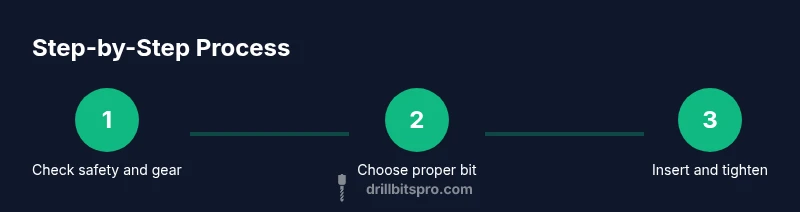
Power off the drill and remove the battery if possible. Clear the workspace, clamp the workpiece, and put on safety glasses. This prevents accidents and keeps your setup stable during insertion.
Tip: Always verify the drill is not energized before handling bits. - 2
Choose the correct bit and verify shank
Select a bit that matches the intended material and hole size. Check that the bit shank will fit and seat securely in the chuck. If using a specialty bit, review any compatibility notes.
Tip: If in doubt about shank size, test with a spare bit in a scrap piece. - 3
Open the chuck wide
Manually open the chuck jaws wide enough to clear the bit shank. For a keyed chuck, you may need to insert and loosen with the key; for keyless, you’ll widen by hand.
Tip: Do not force the bit through a partially opened chuck. - 4
Insert the bit straight
Push the bit straight into the chuck, ensuring the shank seats fully at the base of the jaws. Avoid angles that tilt the bit.
Tip: Keep the bit perpendicular to the workpiece for starting alignment. - 5
Tighten the chuck
For a keyed chuck, tighten in a consistent pattern with the key. For a keyless chuck, tighten by hand until the bit cannot be pulled out. Check for any wobble.
Tip: Tighten gradually and verify bite before applying cutting pressure. - 6
Test and adjust
Gently rotate the bit by hand to confirm it’s secure. If there is any wobble, re-seat or switch to a different bit.
Tip: Always test with light rotation before starting the actual cut. - 7
Begin drilling with care
Start at a low speed and light pressure to establish the hole. Maintain steady, straight motion and pause if you notice slipping or noise.
Tip: Pilot holes can help with larger diameters to prevent wandering.
Got Questions?
Do I need a chuck key for all drills?
No. Some chucks are keyless and tighten by hand. If your chuck is keyed, use the key to ensure a secure bite. Always verify which type your drill uses before tightening.
Some drills use a keyless chuck that you tighten by hand, while others use a chuck key. Check your drill model to confirm, and tighten securely.
Can I use any drill bit in any chuck?
Bits must match the chuck’s shank size and the material. A mismatch can prevent full seating or cause slippage. Always choose a bit compatible with both the chuck and the work material.
Ensure the bit shank fits your chuck and matches the material you’re drilling.
Why does my bit wobble after seating?
Wobble generally means misalignment, an uneven seating, or a damaged chuck or bit. Re-seat carefully, clean the chuck, or try a different bit if wobble persists.
Wobble usually means the bit isn’t seated properly or the chuck is worn. Re-seat and inspect components.
How do I remove a damaged bit from the chuck?
Power off, open the chuck fully, and carefully pull the bit. If it won’t come out, use pliers gripping the bit shaft—avoid pulling on the cutting edge. If stuck, seek professional help.
Turn off the drill, open the chuck, and gently remove the bit. If it’s stuck, don’t force it.
Should I lubricate the chuck or bits?
Lubrication is rarely required for the chuck itself. For metal drilling, a light lubricant on the work surface and bit edge can reduce heat, but avoid gumming the chuck.
Lubrication isn’t usually needed for the chuck; a light oil on metal bits can help manage heat.
Is there a difference between wood and metal bits when inserting?
Bit type matters: wood and metal bits have different tips and shank tolerances. Ensure you use the correct bit for the material and that the chuck can grip it securely.
Yes, wood bits differ from metal bits in tip design; use the right bit for the material and secure the chuck.
Watch Video
Top Takeaways
- Check chuck type and bit compatibility before loading
- Seat the bit fully and center it to prevent drift
- Tighten securely and test for wobble prior to cutting
- Wear safety gear and tidy your workspace
- Maintain bits and chuck after use