What Drill Goes Through Brick: A Practical DIY Guide
Learn which drill goes through brick, why a hammer drill with a masonry bit is essential, and step-by-step tips for clean, secure brick drilling without damaging mortar or surrounding brickwork.


To drill through brick, use a hammer drill with a carbide-tipped masonry bit. Start with a small pilot hole in the mortar, then advance to the brick, applying steady pressure and letting the bit do the work. Keep the drill perpendicular and clear dust frequently.
Why brick drilling requires care
According to Drill Bits Pro, brick drilling demands careful bit selection and technique to prevent cracks and spalling. The brick's density, mortar joints, and any embedded wires all influence the process. Understanding the material helps you choose the right tool and approach.
Tools and bits for brick drilling
The core toolkit includes a hammer drill with a carbide-tipped masonry bit, a backup smaller pilot bit, safety gear, and a dust management plan. For beginners, keep one set of bits ready and practice on scrap brick before starting the project.
Safety and surface prep
Wear safety goggles, a dust mask, and hearing protection. Protect nearby surfaces with painters tape and a dust shield to prevent chipping. Keep a vacuum handy to manage brick dust and debris.
Quick technique overview (no steps)
Masonry drilling relies on hammer action to break through the brick while the bit cuts a clean hole. Maintain a steady, perpendicular angle and let the bit do the work. Periodically clear dust to maintain visibility and control.
Common mistakes and how to avoid them
Avoid starting with a large bit on hard brick; start small, move gradually, and avoid excessive pressure that can crack brick. Do not drill near electrical conduits; use a stud finder and verify with a live-wire detector.
Finishing touches: anchors and sealants (optional)
After drilling, clean the hole, select appropriate masonry anchors, and insert with light tapping. If the hole is for a wet environment, consider sealing the edge with silicone or anchor sealant.
Tools & Materials
- Hammer drill (with hammer function)(Prefer variable speed and durable chuck)
- Carbide-tipped masonry drill bits(Use appropriate bits for brick and mortar)
- Pilot drill bit (smaller)(Helps guide the larger bit)
- Safety goggles(Eye protection)
- Dust mask or respirator(Prevent inhalation of brick dust)
- Hearing protection(Optional for extended use)
- Vacuum or shop vac(Keep dust under control)
- Tape measure and pencil(Mark drill location precisely)
- Water spray bottle (optional)(Dust suppression)
Steps
Estimated time: 25-40 minutes
- 1
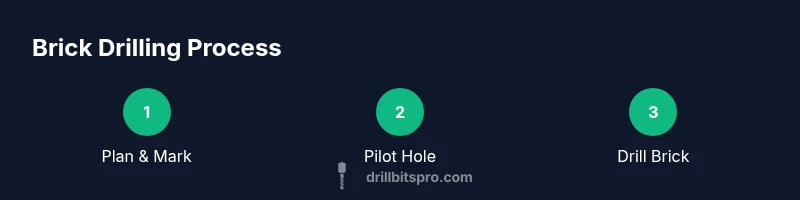
Plan and mark the exact location
Measure and mark the drill spot, ensuring it is away from edges and wires. Use a level to verify height and alignment. This helps prevent misdrilling and guarantees a clean, accurate hole.
Tip: Double-check measurements before you drill. - 2
Set up pilot hole in mortar
If possible, start with a small pilot hole in the mortar joint instead of the brick face to guide larger bits and reduce brick cracking. Keep the drill steady and perpendicular.
Tip: Use a lighter touch at the start to avoid wandering. - 3
Switch to masonry bit and begin brick drilling
Switch to a carbide-tipped masonry bit and gradually apply pressure as the bit begins to bite. Maintain a perpendicular angle and let the hammer action do the work.
Tip: Pause to remove dust after every inch of progress. - 4
Drill to final depth and clean hole
Continue drilling until you reach the desired depth, withdrawing the bit occasionally to clear debris. Use a vacuum to keep dust down and inspect the hole for uniformity.
Tip: If the hole binds, back out slightly and resume with steady pressure. - 5
Finish with anchors if needed
Insert appropriate masonry anchors or plugs once the hole is clean and true. Light taps with a hammer ensure the anchor seat correctly without overdriving.
Tip: Choose anchors rated for the load and wall type. - 6
Inspect and seal (optional)
Inspect the finished hole for chips and cracks. Apply silicone sealant or edge seal if the hole will be exposed to moisture.
Tip: Seal around anchor edges to improve longevity.
Got Questions?
What drill goes through brick?
A hammer drill with a carbide-tipped masonry bit is best for brick. It delivers percussive action to cut through masonry while the bit penetrates efficiently.
Use a hammer drill with a masonry bit for brick. It combines impact with rotation to drill cleanly.
Can I drill brick without a hammer drill?
Drilling brick without hammer action is possible with high effort and slower progress, but it risks cracking. A rotary hammer or hammer drill is strongly recommended for consistent results.
A hammer drill is strongly recommended for brick to get clean holes with less effort.
Should I drill into mortar or brick?
Drilling into mortar can be easier and helps avoid cracking brick, but it may not anchor as securely. For most mounting needs, start in mortar if possible, or drill into brick with caution.
If you can, drill into mortar for easier holes; otherwise brace and drill into brick with care.
What safety gear is essential?
Wear safety goggles, a dust mask, and hearing protection. A long-sleeve shirt and gloves protect skin from sharp brick edges.
Goggles, dust mask, and hearing protection are essential for brick drilling.
Which anchors work best in brick?
Plastic or metal masonry anchors designed for brick walls work well. Choose an anchor rated for the load and brick type, and insert straight with a gentle tap.
Use masonry anchors appropriate for brick walls and your load requirements.
Watch Video
Top Takeaways
- Choose a hammer drill with a masonry bit for brick.
- Start with a small pilot hole to guide the larger bit.
- Drill perpendicular to the surface and clean dust frequently.
- Use appropriate anchors after drilling for secure mounting.